Examples
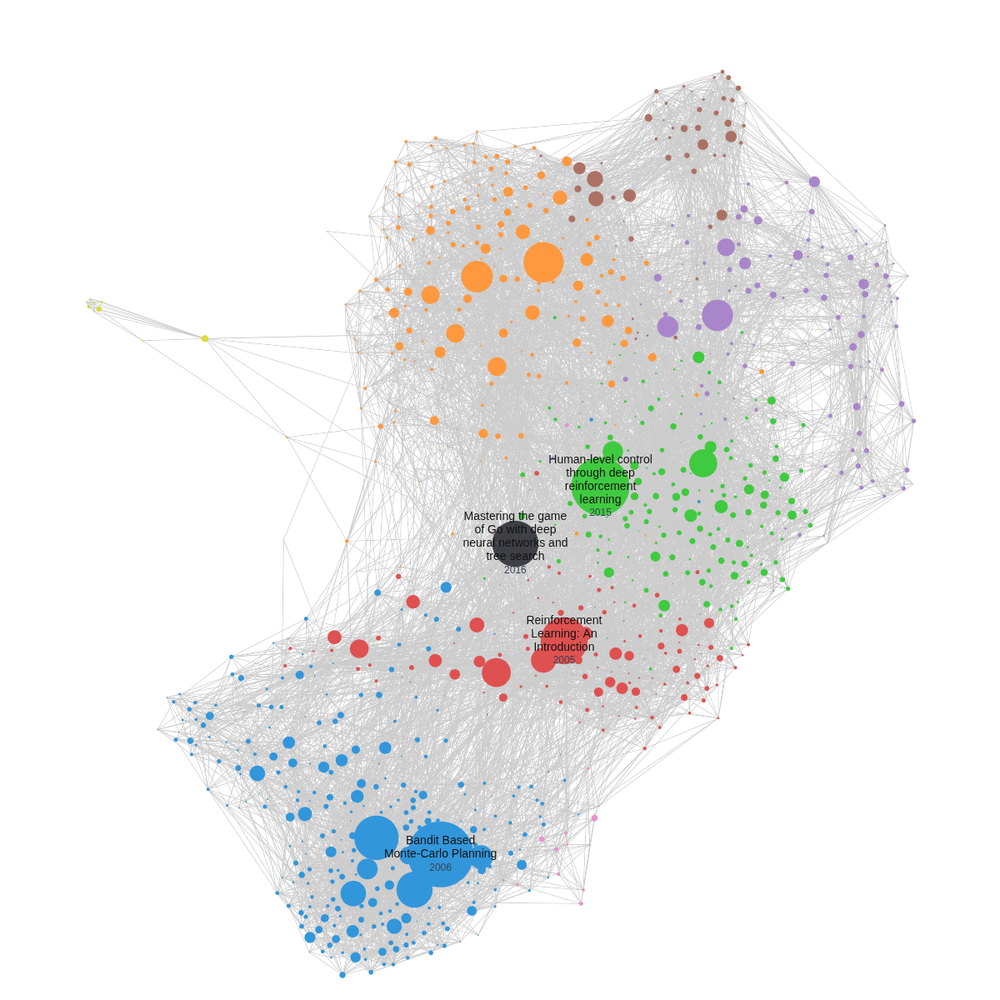
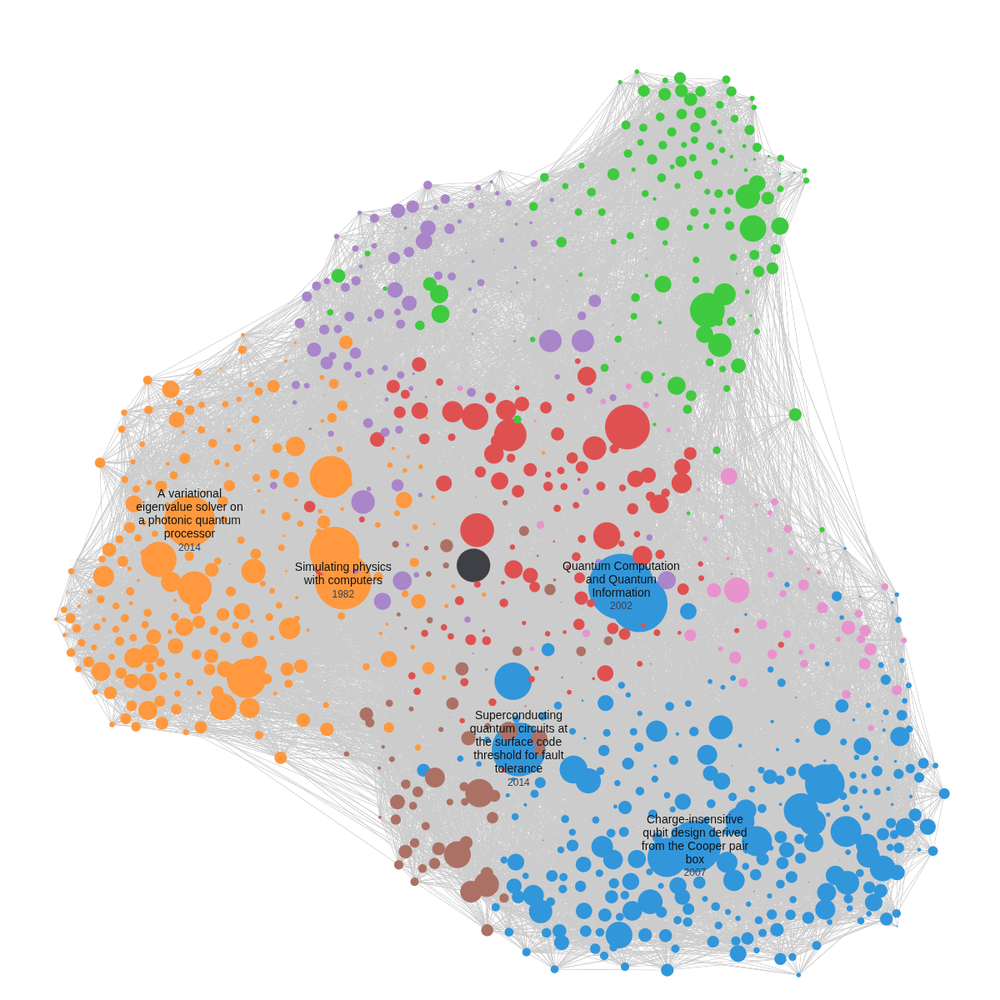
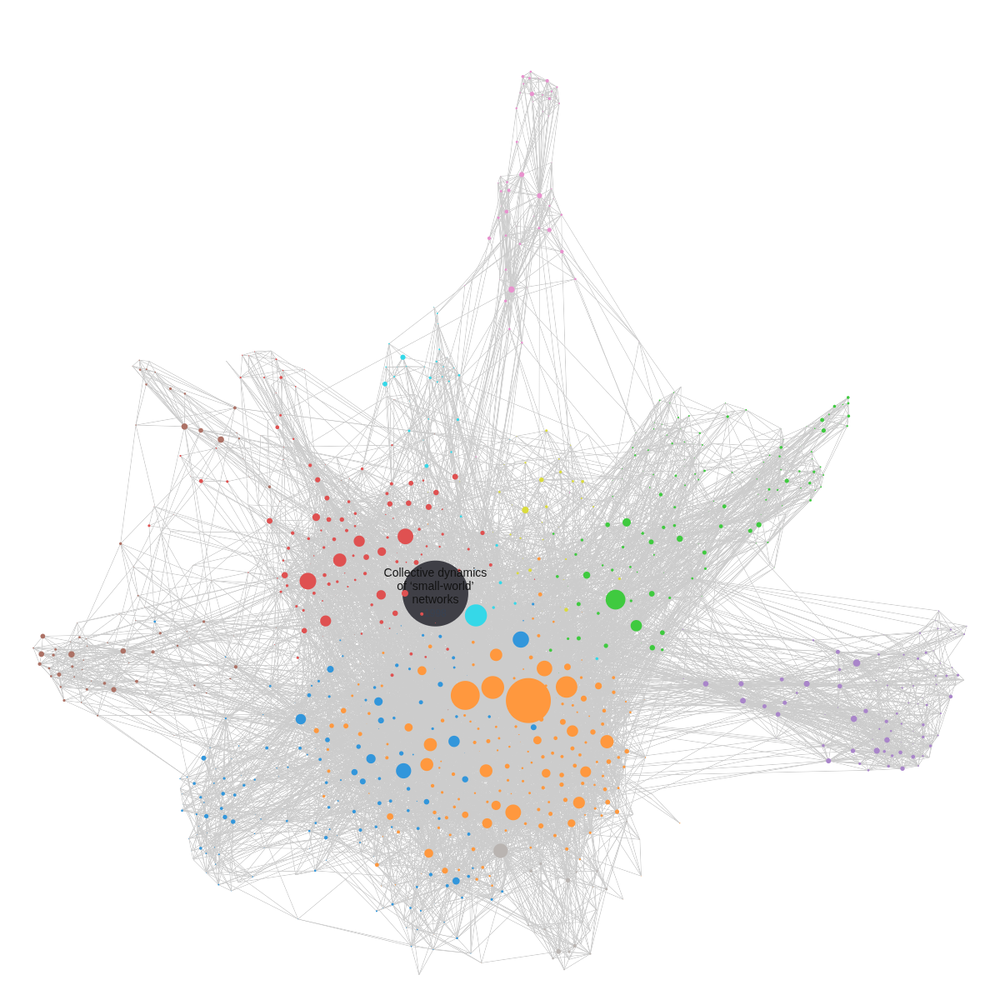
The citation graphs of three famous papers:
Find papers, select them, build their citation graph.
The citation graphs of three famous papers:
Citation Graph allows to visually search and identify:
Search articles by title or authors and tick the ones to include, or paste their DOIs, or the content of a bibtex file.
10.3847/0004-6256/152/6/157
10.1103/PhysRevX.9.031020
https://dx.doi.org/10.1088/0004-6256/148/5/77
10.3847/1538-4365/ab700e
@Article{Griffiths1984,
  author={Griffiths, Robert B.},
  title={Consistent histories and the interpretation of quantum mechanics},
  journal={Journal of Statistical Physics},
  year={1984},
  volume={36},
  pages={219-272},
  doi={10.1007/BF01015734}
}

@Article{Freedman2021,
  author={Freedman, Michael and Zini, Modjtaba Shokrian},
  title={The universe from a single particle},
  journal={Journal of High Energy Physics},
  year={2021},
  doi={10.1007/JHEP01(2021)140}
}
Citation Graph visually maps these articles and their neighboring articles.
keyword1, keyword2 && keyword3: the comma is OR, && is AND, and OR is evaluated first.We use data from OpenAlex.